


A challenge to all apple eaters: stand up to the Light Blue lovers and tell them, at the top of your lungs, what you think about apples! I think this: you have destroyed our nature! And somebody should take responsibility! But who? Let’s find them. Review of Malum / ACAMPORA.
Today it’s going to be a longer one. We’re taking the apple in perfumery en bloc, so go make yourself a coffee and lock the cats and children in the pantry.

How Granny Smith, the EU and Light Blue Are Ruining Nature and Our Taste
Everybody loves apples. I don’t know anybody who doesn’t. Apple strudel, calvados… And Light Blue by D&G has become almost a synonym for the smell of apple. So, if you want to understand Malum, first get to know the family tree of LB.
In 2001, Light Blue was a revelation. What? This stupid little summer water? And yet it caused a lot of things.
First: food-grade AROMA became an ingredient in perfume. (If you want to know what the difference between aroma and fragrance is, read What Is… Aroma and Fragrance.) It was a taboo. And suddenly it wasn’t. Just think about it. Angel without food-grade caramel aroma? Impossible. And then came the followers, including La Vie Est Belle, where the caramel idea was taken to such an absurd level…
Second: suddenly there was a real perfume that smelled like a fresh apple. Or pear. Or strawberry. Or apricot. Until then, the era of chypres, light florals, citrus and unisex freshies had been going somewhere else. And suddenly this!
Then came a million relatives of LB. Pears. The purple Lanvin, the sales leader for something like fifteen years. Today’s Valaya. LB itself is still alive and doing very well. And there are brothers, sisters, duplicates, copies, fakes… Originality disappeared somewhere along the way. Today LB seems completely ordinary to you. But it’s actually the other way around: all those perfumes resemble the blue Light Blue from 2001.
Third: Light Blue opened the cult of the perfumer. Although there is a little trick in it. Olivier Cresp is the perfumer. An excellent perfumer, obviously. But the author of the apple idea was Domenico Dolce, who was also the Art Director, the person deciding what the final result should smell like. He gave the perfumer precise instructions.
Domenico the brain, Olivier the hands.
So who is the real author?
Domenico declared himself the author and the internet war started: “Domenico is lying!” Olivier Cresp eventually got this position. But I think it’s unfair. Without Domenico, the fragrance wouldn’t exist. Since then, anonymous perfumers have started to become visible. Niche brands tell us who made the perfume. The art directors, however, are still mostly ignored, unless they are the art director and the perfumer at the same time, like Andy Tauer or Santi Burgas.
Injustice! We want to know the brains!
I only hope I’m not mixing up Dolce and Gabbana and that the whole thing wasn’t actually the other way around 😀
Inspiration from a Supermarket Apple. Thanks, dear EU!
The magical apple Domenico loved was a supermarket Granny Smith. The perfumer had to create its image in Sicily. But where did Granny Smith come from? From Adam (and Eve), the story goes like this: the EU unified the standards for fruit in supermarkets. Remember the whole thing about bananas having to be the right shape? The consumer wants guaranteed identical goods everywhere in the EU. And then you can also make nice statistics like: how many apples does the average European eat? The policy forced growers to uproot old varieties and plant cultivated Goldens and Grannies instead. Same size. Fragrant. Sweet. Easy to put into calorie tables. No surprises.
The trees are hardy, lush and productive. They changed the fruiting cycle so we can have ripe apples practically all year round. We laughed at socialist social engineering and the EU actually made it happen! I don’t know how much Light Blue contributed to the popularity of Granny Smith. If it did, fine, it’s good for our health. But what about nature?
Perfumed Apple Core Devastates Nature
British scientists made a census of trees. And they found that around roads and motorways, the landscape is increasingly dominated by uniform supermarket apple varieties. People drive more. They throw apple cores out of car windows.
It’s organics, it’s fine.
The seeds of supermarket apples take root easily. And the trees, bred for strength and productivity, suppress the trees around them. They produce lots of large, sweet apples, which wild animals and birds like too. The animals carry the seeds farther and farther from the roads. The supermarket varieties spread. And they push out the native species. Punishment for our proud civilisation. Thank you, EU! Thank you, Light Blue! 😉

Review Malum / ACAMPORA PROFUMI
Vesuvius erupted as punishment for the proud people of Pompeii.
Malum comes from Pompeii. But the poor thing isn’t pompous at all. Compared with Granny Smith, it’s almost a poor little wild thing. Wild trees appeared after greedy Pompeii was gone, growing on poor lava. A wild proto-apple of the Mediterranean shores, which doesn’t exist anywhere anymore. It was pushed out by cultivated varieties. Malum is part of the Tadema collection. The Dutch painter Lawrence Alma-Tadema was obsessed with Pompeii in the 19th century. He painted photorealistic visions of the grand life of Pompeii, based on archaeological excavations.

His famous painting The Roses of Heliogabalus shows the extravagant emperor Heliogabalus and his Queen Mother. They managed to spend the wealth of the kingdom on pleasures in just a few years. The painting shows rose petals raining down on guests. It was a surprise from the emperor, because he knew about their love of scent. There were so many roses that most of the guests suffocated. Pompous.

Fresh Juice to the Maximum
The opening is photorealistic, just like Tadema’s paintings. You bite into a wild, juicy apple. Tart, sour, watery. Full of vitamin C. It is extremely aromatic. Wild varieties have all kinds of flavours, before we breed them into one sweet, identical fruit. There are herbal green tones. Here they are represented by fennel, fresh wild fennel.
The sharpness is supported by freshly grated ginger. There is fruit sugar too, because the apple ripened in the sun. But very little. Just enough for a tiny caress of the tongue, so the sour tartness doesn’t make tears jump into your eyes. At the beginning it’s terribly intense. Close your eyes. Open your mouth. Smell it. And you have the feeling that you have just bitten into an apple. An apple digger has pushed into your mouth. Very convincing photorealism.
Salted Strudel
Then comes the classic pyramid. The sour tones slowly disappear and the heart and base come out. The base is quite weak, because the focus is still on the watery and green apple. Perfumer Miguel Matos continues the tutorial “how to eat an apple”. You move from the sharp, sour peel towards the core. You bite into the seed. It is dry, like a grain of cardamom. And then, almost amused, you get a spoonful of cinnamon. Cold, synthetic, almost mineral cinnamon. You may know it from Nu_Be / One of Those.
And the middle is this combination: water notes + fennel + green apple + cold cinnamon.
That’s MEGA WEIRD, right? This perfume is mega weird. Like when you’re baking strudel and accidentally take the salt shaker instead of the sugar bowl. And yet, you think: what can possibly be interesting about an apple? There is a dominant sea-water note, sour juiciness that makes your mouth water.
The End Is Good… Or?
At the end there is only the calone sea-water tone left. About three hours. It can’t really be avoided. Calone, with its smell of windshield washer fluid, is one of the strongest ingredients there is. I REALLY don’t like it. But I forgive Matos. This is a very well-made journey to the essence of an apple. And I’m willing to close my eyes and bite into fennel too.
Is It Perfume, or Art?
If you like apples and marine-water notes, then yes: perfume. An indispensable pearl for the shelf. Usually I write: you should try it. This time: YOU MUST TRY IT! And vice versa. If you don’t like the smell of windshield washer fluid, you won’t get over it. But even if you don’t like it, try it. Matos has painted a photorealistic portrait of an imaginary apple from memory, just like Tadema. That’s not very common in niche perfumery. Many brands want commercial success. They want to survive. They want to sell. Acampora is on my white list because they make art. They step into themes. Remember the scandalous Melamin? It survived only one day because of the hatred on social media and #blacklivesmatter, and Acampora had to bury it. There is also the strange Pompei Red in the Tadema collection, the colour of brick made from clay. It is so conflicting that I won’t review it. But sometimes I smell it just for pleasure.
Where to Buy Malum?
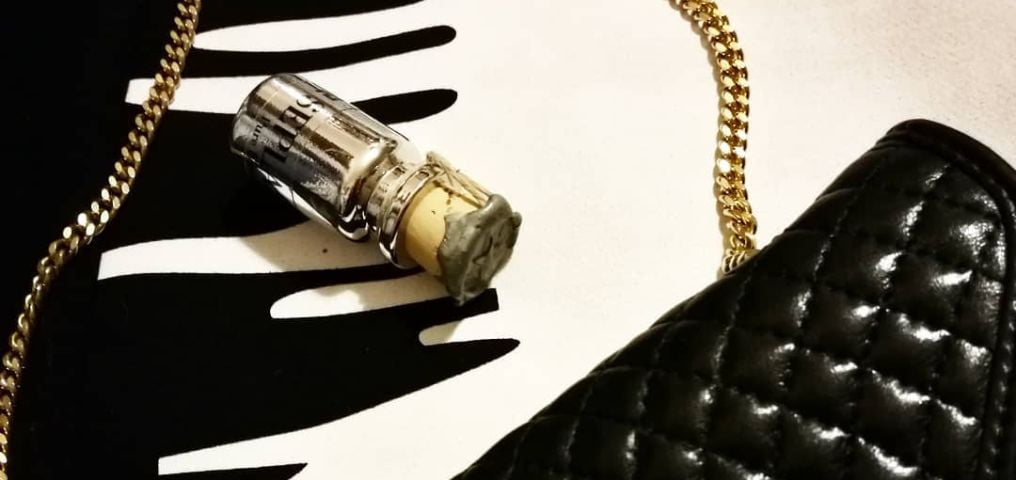
There are a few boutiques in southern Europe, but mainly the temple in Naples, or the website. Acampora resists the grey market, so my advice is: make time. Order samples. Find a perfumery. Give yourself to it. Nobody else will have their fragrance but you. The bottles are sealed by hand in little tins. You want that. You can also buy a set with the concentrate and an empty bottle and make your own EdP or EdT concentration according to the instructions.
On Tuesday we’re going to Milan. So follow my INSTAGRAM with ESXENCE ON-LINE. Then we’ll continue with the TOP 10 Esxence 2023 (and if you want to remember another good year, here is TOP 10 Esxence 2022).


About the author:
Romana Granátová is the founder of Frangipani.cz, an independent online magazine dedicated to niche, indie and art perfumes, perfume history, and premium and niche anti-ageing cosmetics. Founded in 2011, Frangipani has brought together a team of authors from the Czech and Slovak perfume community who have published more than 1,500 articles and reviews.Romana also publishes perfume articles and analysis in lifestyle and professional media and, as a senior marketing professional, provides consulting for perfume and cosmetics brands.
Since 2015, Frangipani.cz has been a permanent media partner of Esxence Milano, the international exhibition dedicated to artistic and niche perfumery. Since 2014, the website has also been permanently archived by the National Library of the Czech Republic in recognition of the expertise and quality of its content.
LinkedIn | Instagram


